Ready with specialized categories
Ships with dbt, Dagster, data analysis, text-to-SQL, RAG, CSV, and more. Ask in plain English. It already knows how those jobs work.
This is where Metroflow shows up in the real world: agents that read the Context Layer, then connect to tools and the ecosystems you already run.
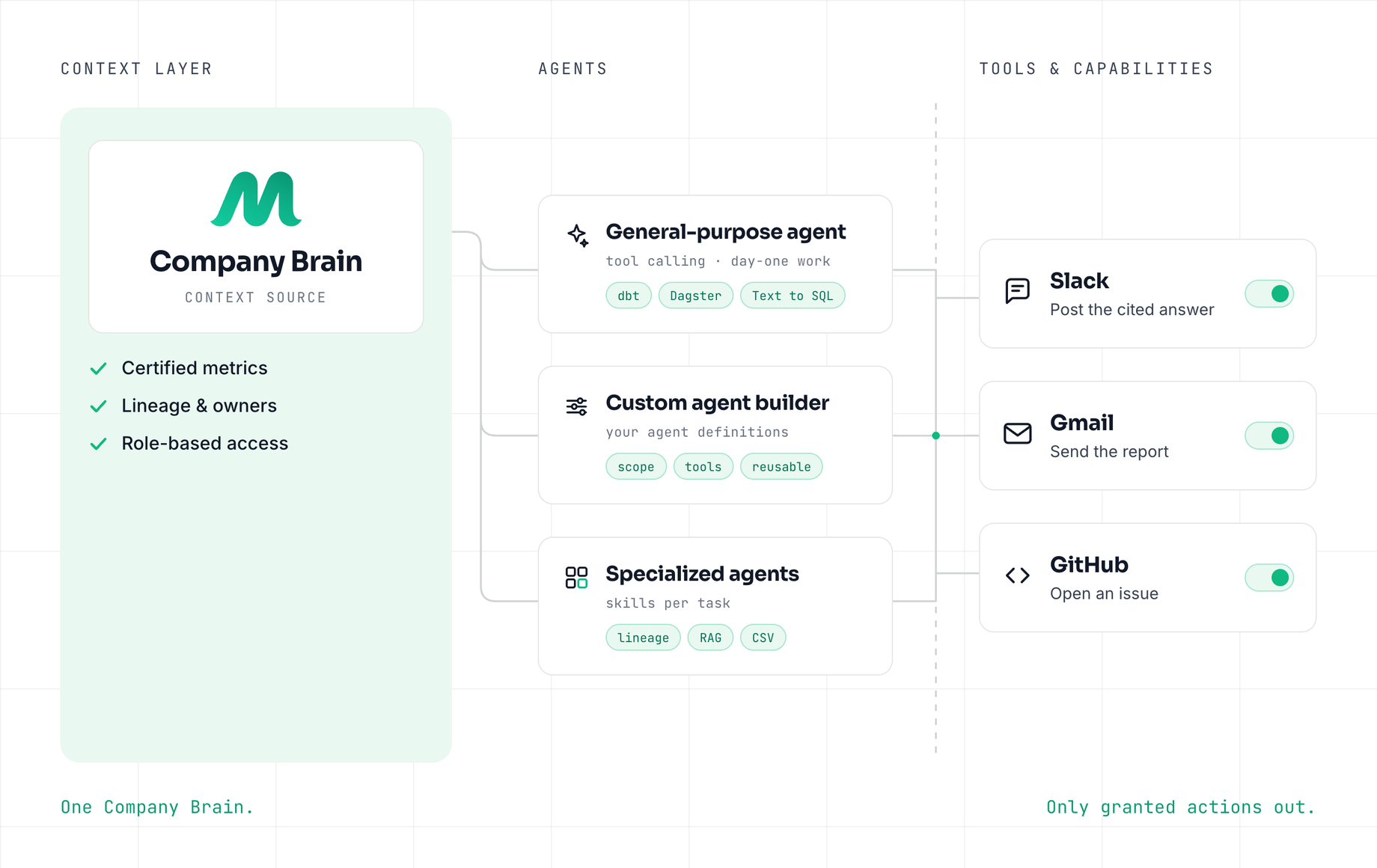
A general-purpose agent for day-one work, plus a custom agent builder when your workflow is specific.
Ships with dbt, Dagster, data analysis, text-to-SQL, RAG, CSV, and more. Ask in plain English. It already knows how those jobs work.
Pick tools and capabilities — web search, Slack, Gmail, GitHub, and other integrations — then save it as a reusable agent for your team.
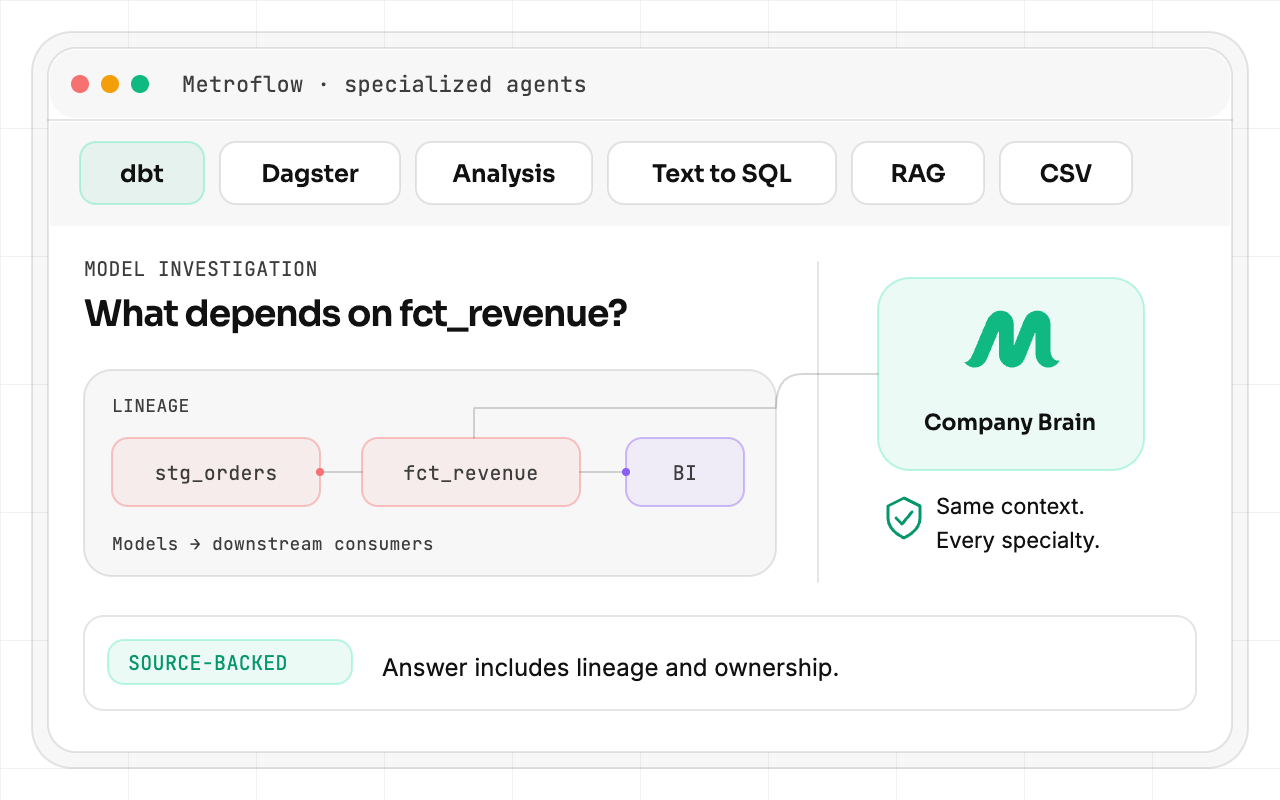
Not a blank chatbot. Categories for the work data teams actually do, each grounded in the same Company Brain.
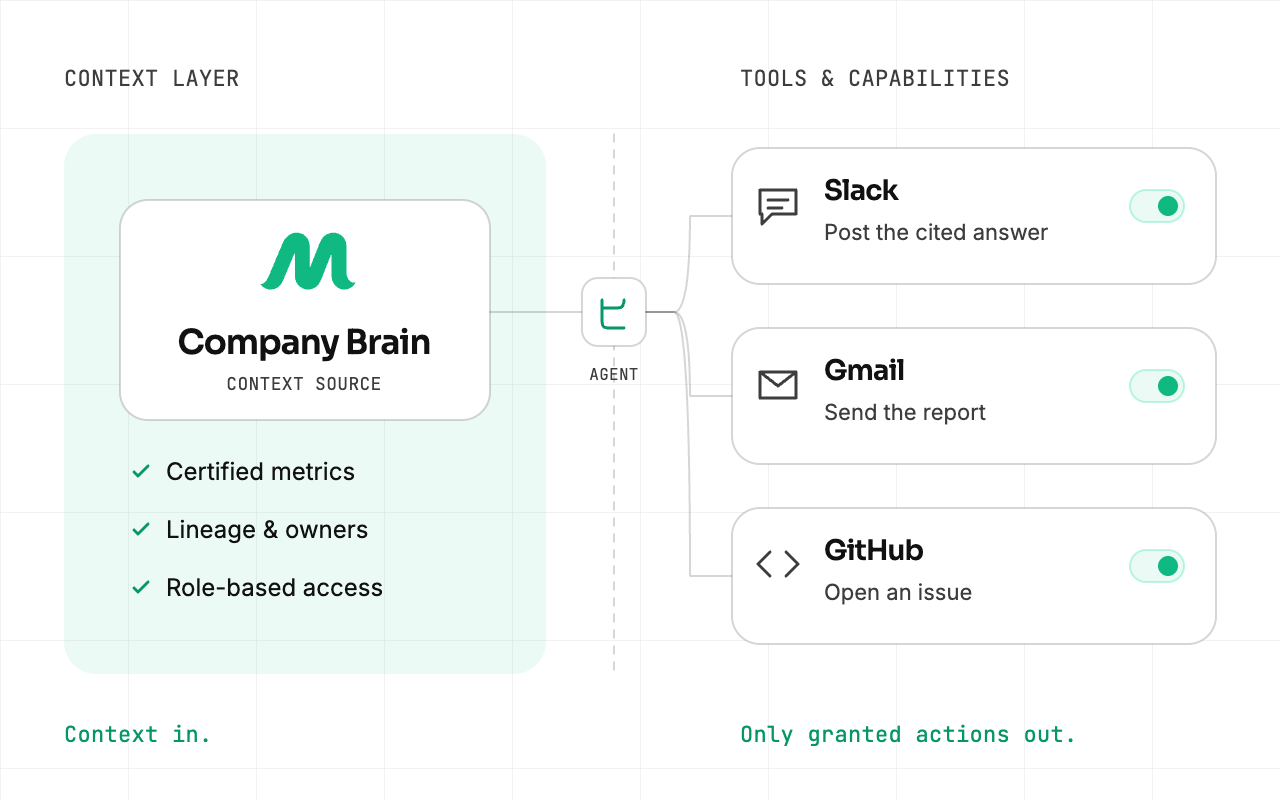
Give an agent only the tools it needs: search the web, post to Slack, send Gmail, open a GitHub PR. External systems stay outside the data plane. Context still comes from Metroflow.
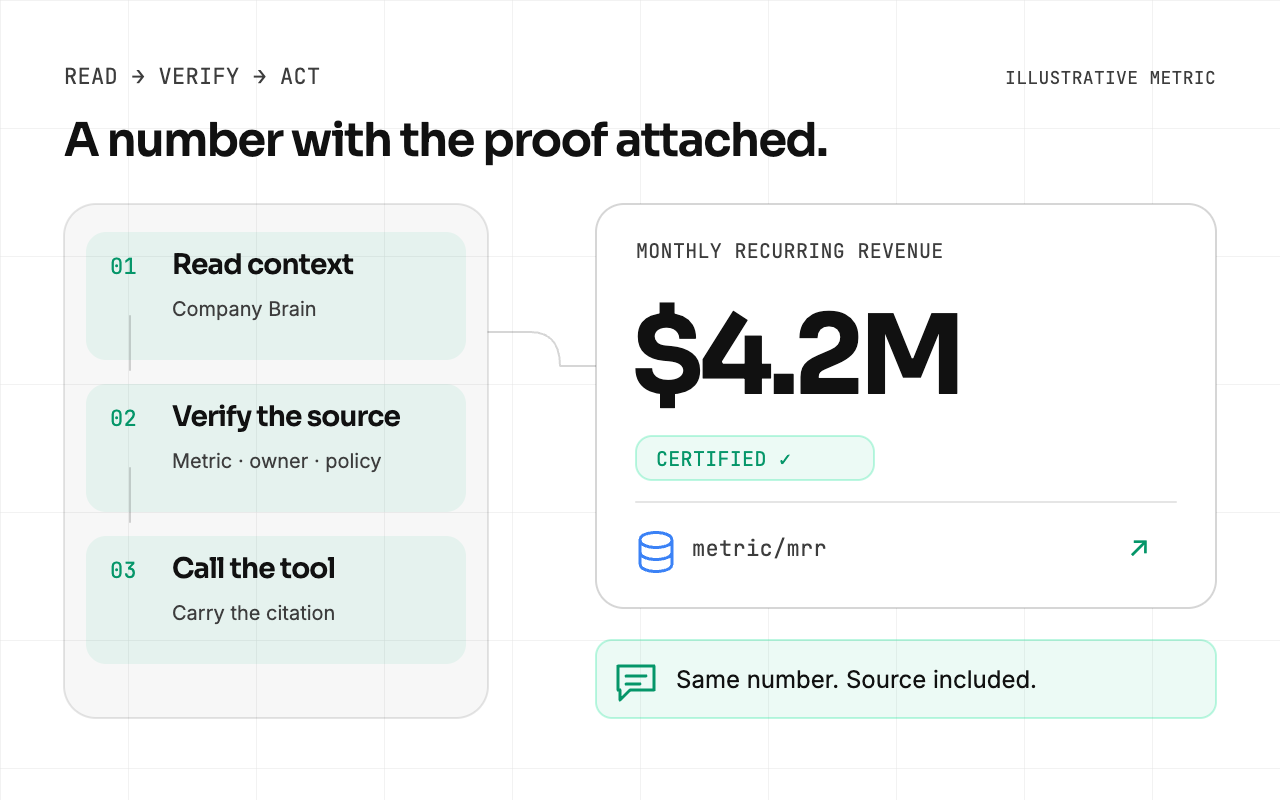
Every agent — general-purpose or custom — reads the Context Layer before it acts. Certified metrics, lineage, policies, and owners. That is the Company Brain. Slack and GitHub never get a guessed number.
Users define workflows in plain language. The agent uses Company Brain for the analysis, then the tools you attached for delivery.
“Perform data analysis on this dataset every week and send it to my Slack channel.”
Data analysis agent · Slack · weekly
“Compile the certified MRR pack as a PDF and send it to my email.”
Context Layer metrics · Gmail · on close
“If a dbt model fails, open a GitHub issue with blast radius from the graph.”
dbt category · GitHub · on failure
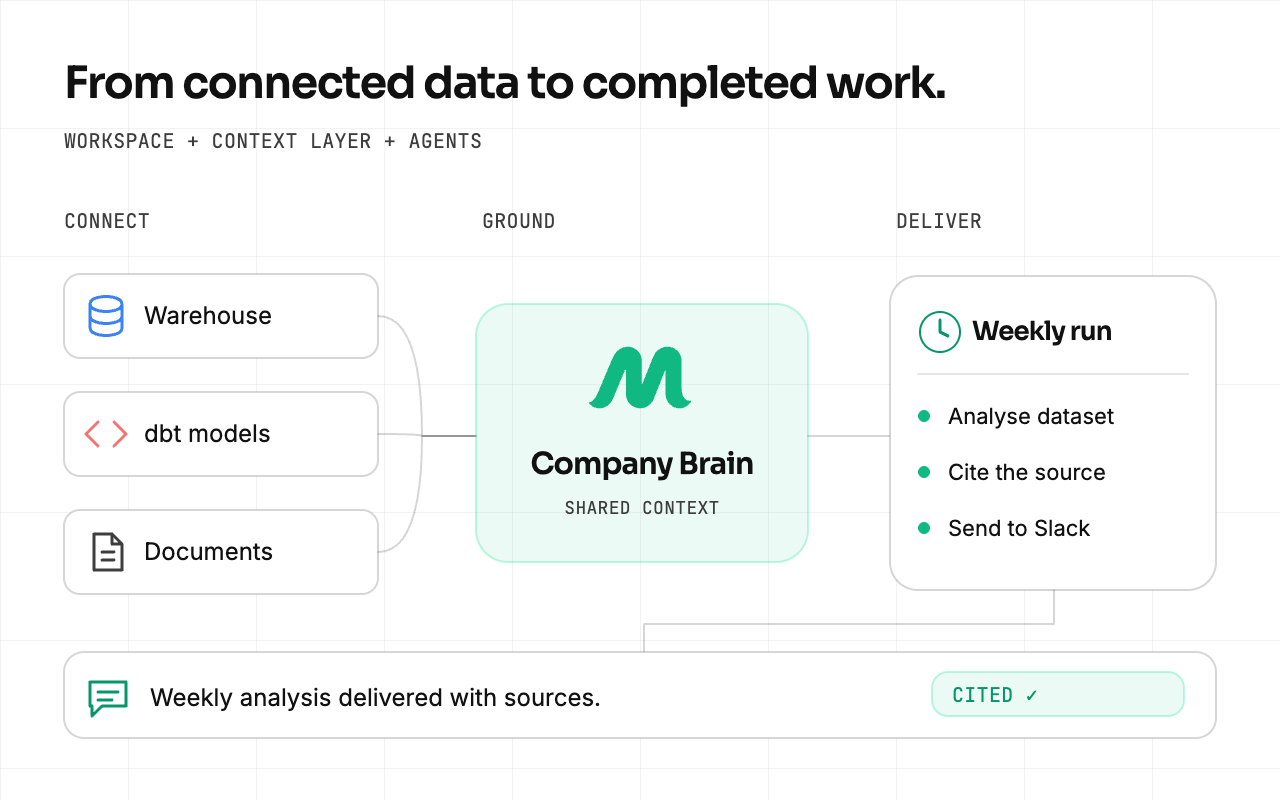
Connect the stack. Certify the graph. Then this layer is how that work leaves the product: agents talking to Slack, Gmail, GitHub, and the rest of the ecosystem, still citing Company Brain.